

Wood vs. Composite Deck Railing: Which Delivers More Long-Term Value?
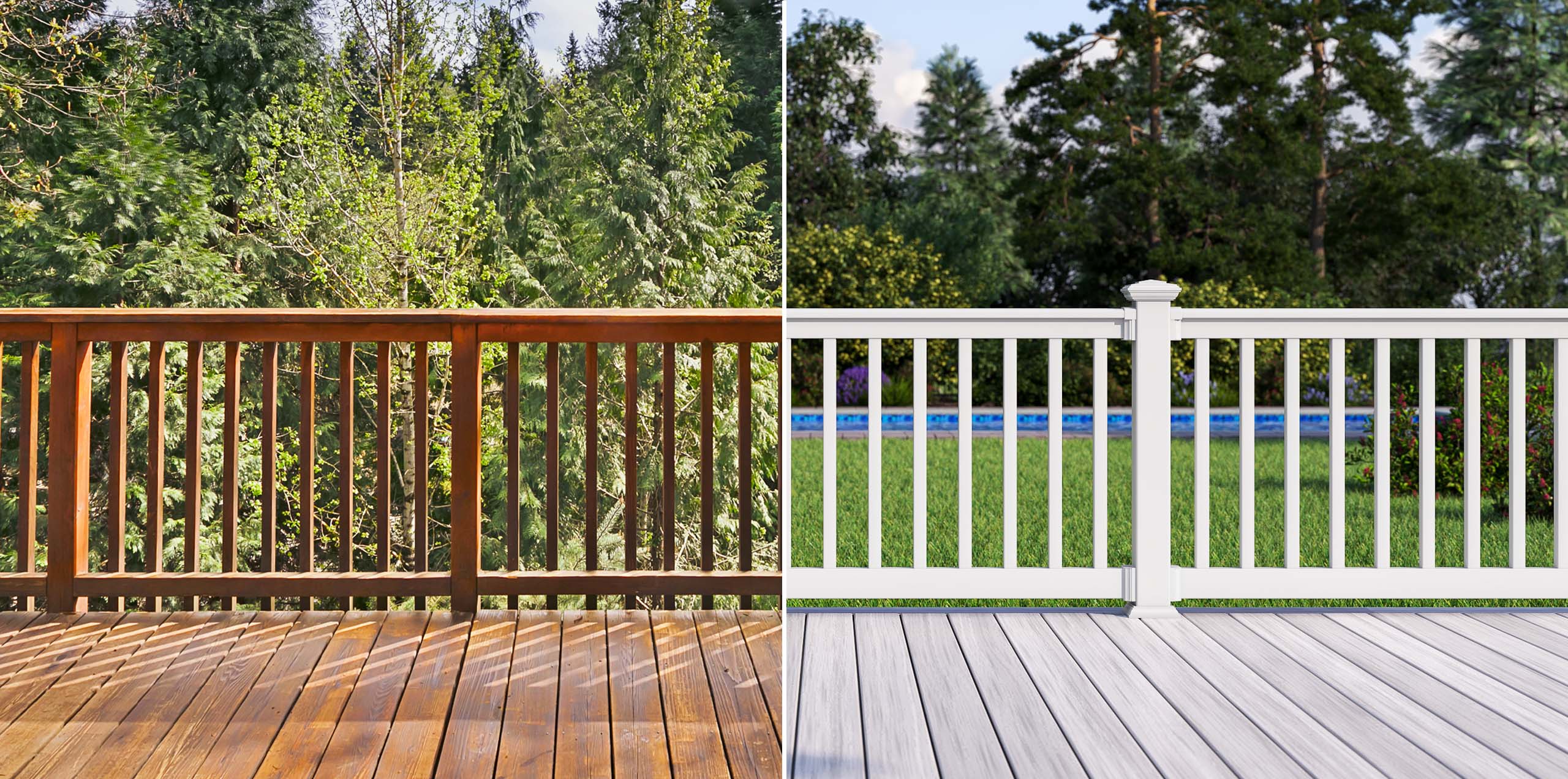
Your deck railing shapes the look of your outdoor space. When choosing between wood and composite deck railing, consider cost, style, upkeep and durability.
Wood costs less upfront and offers a natural look. Composite costs more initially but requires less maintenance.
Wood vs. Composite Deck Railing at a Glance
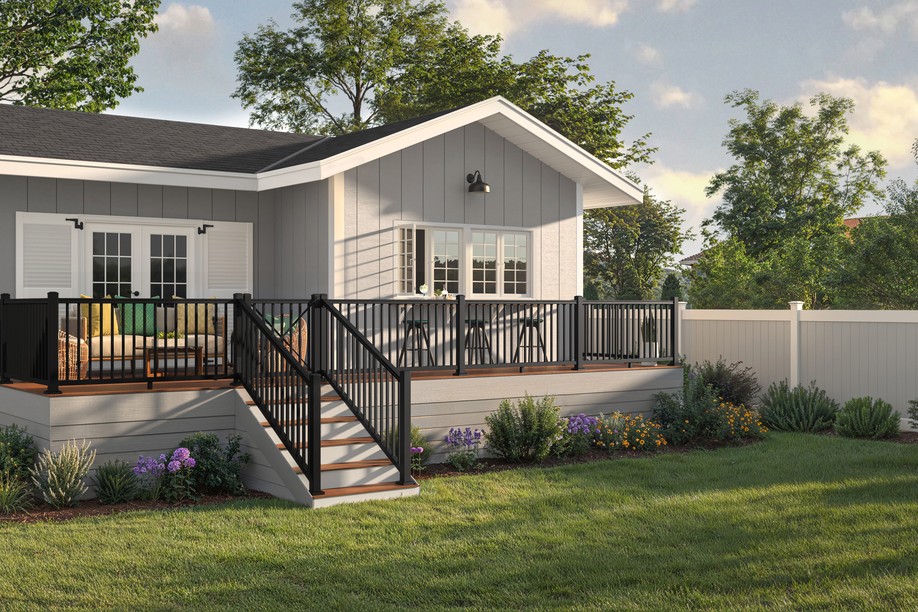
Wood and composite deck railing differ in cost, maintenance, durability and appearance. Wood typically costs less upfront, while composite offers long-term value with less upkeep.
Here’s how the two materials compare:
- Upfront cost: Wood railing costs less initially, while composite requires a higher investment.
- Maintenance: Wood needs regular staining and sealing. Composite requires occasional cleaning with soap and water.
- Durability: Wood can rot, crack or splinter. Composite resists these issues.
- Appearance: Wood features natural grain patterns, while composite offers versatile colors, finishes and infill options that help homeowners create an intentional design, frame their view and elevate their outdoor space.
- Weather resistance: Wood needs protection from moisture and sun exposure. Composite resists water and mold.
- Long-term value: Wood offers a lower starting price, while composite reduces ongoing maintenance costs.
Wood works well for homeowners on a smaller budget. Composite is a strong choice for those who want lasting performance with less maintenance.
What Is Wood Deck Railing?
Wood deck railing uses lumber such as cedar, redwood and pressure-treated pine. It offers natural grain patterns and a classic look.
You can stain or paint wood to match your home. Its lower initial cost makes it popular for budget-friendly decks.
However, wood needs regular care. Moisture, sun and insect damage can weaken treated wood over time. Cleaning, staining and sealing help protect it.
What Is Composite Deck Railing?
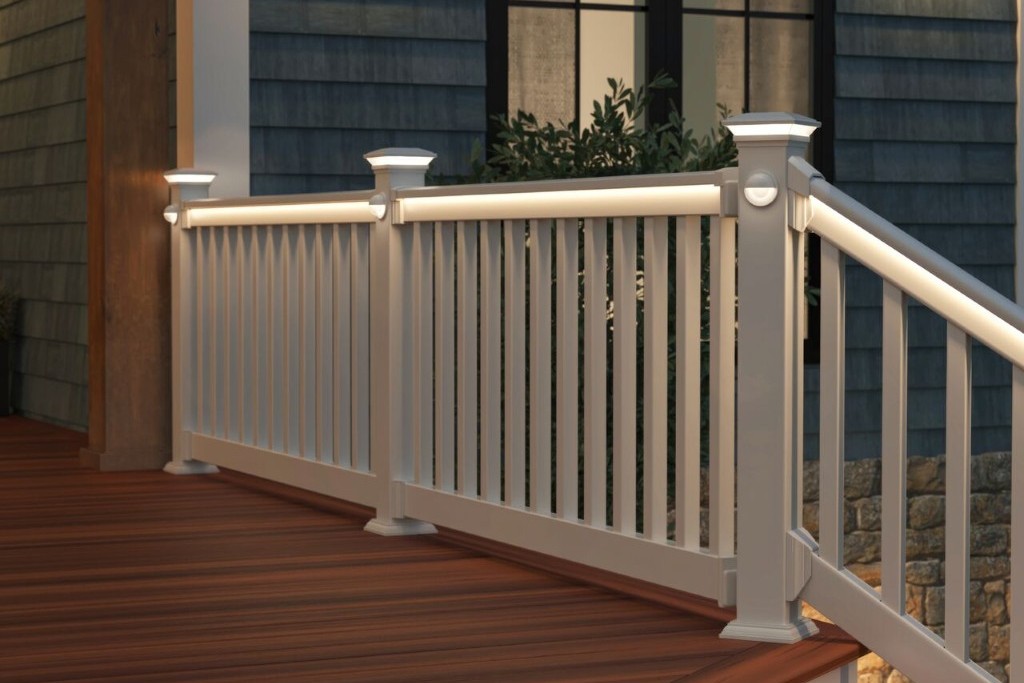
Composite deck railing combines materials to create the look of wood with less upkeep. Unlike natural wood, it doesn’t need regular painting or sealing.
RDI® Railing uses Composicore®, a wood-free material that resists water, rot, splintering, warping, staining and mold.
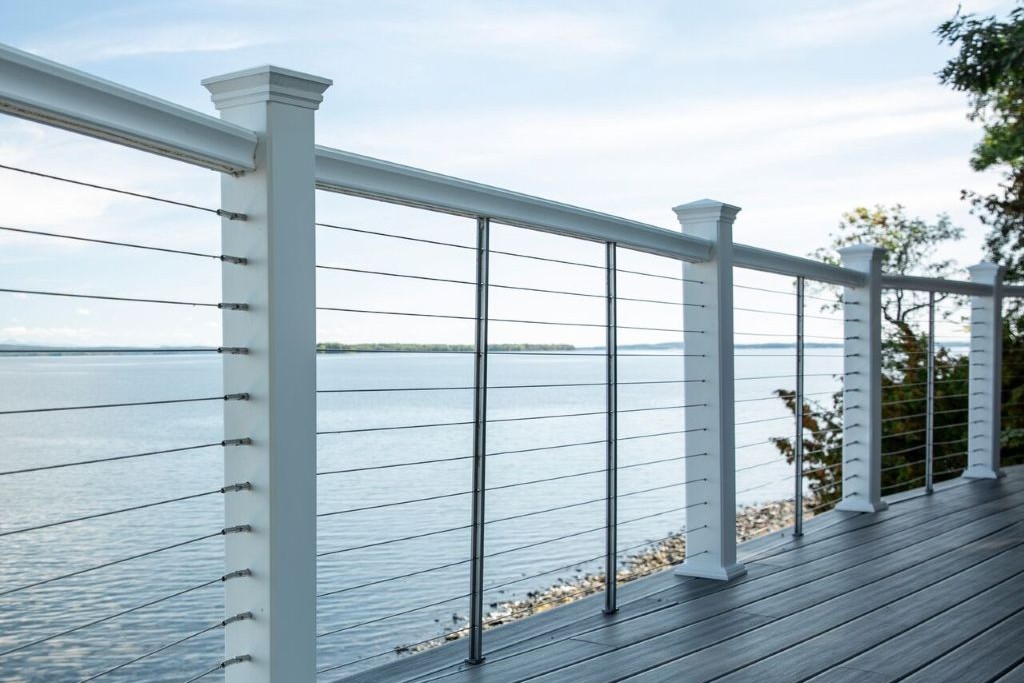
RDI collections like Transform® and Overlook™ offer different colors and rail styles. Choose aluminum balusters or cable infill to match your home’s design.
Wood vs. Composite Railing: Key Differences
Maintenance
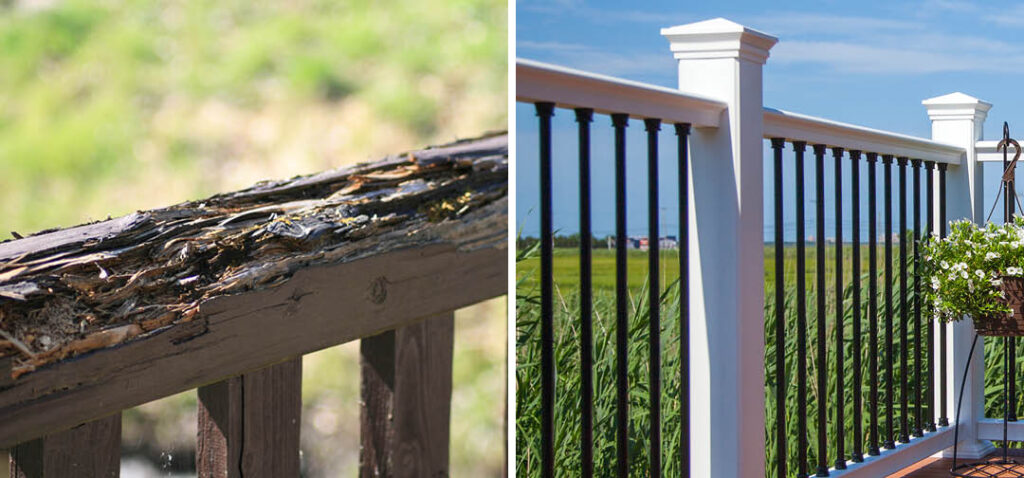
Wood railing needs regular cleaning, sanding and refinishing. You may need to stain or seal it every year or two, depending on your climate. Composite railing requires much less work. Simply clean it with soap and water as needed. You won’t need to stain, paint or seal it.
Durability and Weather Resistance
Rain, snow and sun can damage wood. Moisture causes rot and cracks, while sunlight fades the finish. Composite resists these problems. RDI’s wood-free material won’t absorb water, helping the railing hold its shape through changing weather.
Appearance and Design
Wood offers a natural look with unique grain patterns. You can change its color with paint or stain. Composite provides a consistent finish. Choose from different colors, rail styles and infill options. Aluminum balusters and cable infill also help frame your view.
Upfront Cost vs. Long-Term Value
Wood usually costs less to buy and install. However, stain, sealant and repairs add to its long-term cost. Composite costs more upfront but needs less care. Fewer repairs and no regular refinishing can save time and money.
Should You Choose Wood or Composite Deck Railing?
The best choice depends on your budget, preferred style and how much time you want to spend on upkeep.
Choose Wood Railing If:
- You have a smaller budget: Wood costs less upfront.
- You prefer natural wood: Real grain creates a classic look.
- You want to change colors: Paint or stain wood to refresh its style.
- You don’t mind upkeep: Wood needs regular care to protect its finish.
Choose Composite Railing If:
- You want easy maintenance: Clean it with soap and water.
- You value durability: Composite resists rot, splintering and warping.
- You prefer consistent color: Composite keeps a more uniform look.
- You face harsh weather: Composite handles moisture and seasonal changes.
- You want long-term value: Less upkeep helps reduce ongoing costs.
- You want design options: Choose different colors, rails and infill styles.
When Should You Replace Wood Railing With Composite?
Check your wood railing for signs of damage or wear:
- Rot: Soft or crumbling wood often signals moisture damage.
- Cracks: Deep splits can weaken rails.
- Splinters: Rough surfaces can catch on hands or clothing.
- Warping: Twisted rails and uneven gaps suggest damage.
- Loose connections: Wobbly posts or rails create safety concerns.
- Frequent repairs: Repeated fixes may cost more than replacement.
- Faded finishes: Gray patches and worn paint can make your deck look dated.
If you notice several issues, composite railing may offer a better long-term solution. Have a qualified professional inspect loose or damaged railings.
How Does Composite Compare With Other Wood Alternatives?
RDI Railing offers several railing materials beyond wood and composite:
- Vinyl: Resists weather and offers an affordable option.
- Aluminum: Lightweight, durable and resistant to rust.
- Steel: Strong, with a protective finish that resists rust and corrosion.
Each material offers a different mix of style, strength and cost. For a broader comparison, explore Why RDI Railing Beats Wood Railing.
Explore RDI Composite Railing
RDI Railing offers composite railing with the look of painted wood and less upkeep. Its Composicore material contains no wood fibers and resists moisture, rot and warping.
Browse RDI composite railing products to explore colors, styles and infill options. Visit the Inspiration Gallery for design ideas or find a local dealer to get started.
Frequently Asked Questions
Is Composite Railing Better Than Wood?
Composite works best for homeowners who want less maintenance and lasting durability. Wood offers a lower upfront cost and natural appearance.
Does Composite Railing Last Longer Than Wood?
Composite generally lasts longer because it resists rot, splintering and warping. Wood can also last for years with proper care, but it needs more upkeep.
Is Composite Railing More Expensive Than Wood?
Yes. Composite usually costs more upfront but needs less maintenance. Wood costs less initially but requires ongoing care and repairs.
Is Composite Railing Worth the Extra Cost?
For many homeowners, yes. Composite saves time on refinishing and can reduce maintenance expenses over the years.
Do You Need to Paint or Stain Composite Railing?
No. Composite railing doesn’t need paint, stain or sealant. Clean it with soap and water to maintain its appearance.
Can Composite Railing Look Like Real Wood?
Yes. Composite offers the look of painted wood with a more uniform finish. RDI provides several colors and styles to match your deck.
Which Requires More Maintenance, Wood or Composite Railing?
Wood requires more maintenance. It needs regular staining, sealing and repairs. Composite typically needs only occasional cleaning.
Related Content
-

Composite Deck Railing Ideas You’ll Want to Steal for Your Next Project
Discover inspiring composite deck railing ideas, from modern cable infills to traditional balusters, and learn …
-

Patio Railing Ideas That Complete Your Outdoor Living Space
Explore patio railing ideas in black, white, cable, glass and metal styles, plus stair railing …
-

Choosing an ADA Handrail: Considerations and Material Options
When an outdoor space calls for a safety handrail, high-quality options from RDI Railing offer …
-

The Best Railing Ideas for Pet Owners
If you’re a pet owner with a patio, porch or deck, the outdoor space isn’t …