


Frequently Asked Questions
Sort By
Search
What should composite deck railing match?
Match the railing to your home first, then to the deck and landscape. Colors that echo siding or trim create a cohesive look, while contrast with deck boards adds definition. Consider architectural style as well, since traditional homes often suit balusters and modern homes suit cable or sleek profiles. Think about the view you want to keep open.
How do I choose a composite deck railing color?
Start with your home’s exterior, including siding and trim. White offers a bright, classic look, while black adds contrast and a modern edge. Gray and earth tones blend into natural surroundings. Request samples and view them in daylight beside your deck boards, since color can look different indoors.
Is composite railing better than wood railing?
For homeowners focused on long-term value, composite often is. It offers lower maintenance and greater durability than wood, along with a consistent appearance. Wood has a lower upfront price and a natural look that can be painted or stained. Your budget and how much upkeep you want to take on will point you to the right choice.
How long does composite deck railing last?
Lifespan varies by product, climate, installation quality and care. Composite railing generally outlasts wood because it resists rot and warping. Many manufacturers back their products with limited warranties. Read the warranty terms closely, since coverage, exclusions and length differ. Proper installation and routine cleaning help any railing reach its full service life.
Does composite deck railing require maintenance?
Composite deck railing requires far less maintenance than wood. It does not need painting, staining or sealing. Cleaning with mild soap and water typically keeps it looking fresh. Check manufacturer care instructions since recommended cleaners vary and inspect posts and connections periodically to catch loose hardware early.
Can composite railing look like aluminum railing?
Yes, to a degree. Some composite systems use sleek profiles and dark finishes that echo aluminum’s clean, modern look. Pairing composite rails with black aluminum balusters can strengthen that style. Real aluminum offers thinner profiles and a metallic finish, so compare samples side by side to see which look suits your home.
Can you use cable infill with composite railing?
Yes. Many composite railing systems accept cable infill, which creates an open look that keeps views clear. Compatibility depends on the manufacturer, so confirm that the posts and rails support cable hardware. Cable also requires proper tensioning and code-compliant spacing, so follow installation guidelines or hire a qualified installer.
What colors does composite deck railing come in?
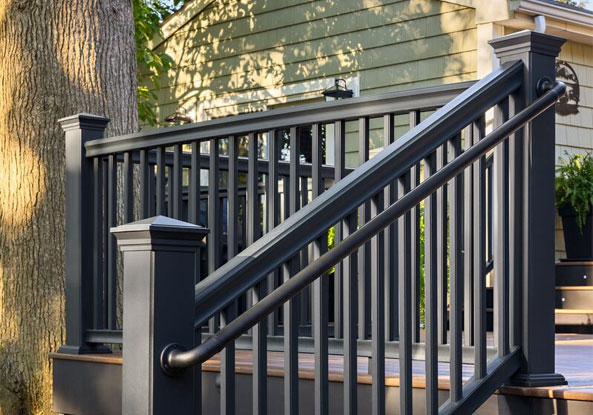
RDI® Railing offers composite deck railing in white, clay, satin white and satin black, depending on the collection. Bella Premier comes in white and clay, while Transform® offers satin white and satin black. Fusion and Overlook™ feature satin black finishes. These options make it easy to complement your home’s exterior, coordinate with your decking and create a cohesive outdoor design.
Is composite railing good for decks?
Yes. Composite railing suits most decks because it resists rot, splintering and warping and needs far less upkeep than wood. It also comes in a range of styles and colors that complement different homes. Check local building codes and manufacturer specifications to confirm the system meets requirements for your deck’s height and use.
What is composite deck railing?
Composite deck railing is a railing system made from a blend of engineered materials designed to mimic the look of real wood. It typically offers strong durability and low maintenance and works with several infill styles such as balusters and cable. Many homeowners choose it for decks, porches and balconies.
Does cable railing have different height requirements?
No. Cable railing has the same minimum height as conventional railing systems for residential applications. Typically, cable railing would need to meet at least 36 inches in height. Additionally, regardless of whether cable railing meets this height requirement, the cables must also prevent a 4-inch-diameter spherical object from passing through them to meet the “baluster infill” provisions.
Can deck railings be taller than code minimums?
Yes. While the code establishes a minimum, it doesn’t establish an absolute maximum. So homeowners may choose to build taller railings for additional privacy, safety, etc. If the homeowner chooses to go with a taller railing, it will also have to meet the space requirements established by local codes for the balusters as well as structural load requirements.
Why are commercial railings taller than residential railings?
Commercial buildings follow the IBC, which sets a 42-inch guardrail minimum to account for higher occupancy loads and public foot traffic. Residential structures follow the IRC’s 36-inch standard, reflecting lower expected usage and single-family occupancy patterns.
What is the minimum stair railing height?
Stair railings must fall between 34 and 38 inches, measured from the tread nosing. This range differs from the 36-inch guardrail height used on open deck edges, since stairs carry a distinct fall risk that codes address separately.
Is deck railing height measured from the deck surface?
Yes. Guardrail height is measured vertically from the deck’s walking surface to the top of the rail. Stair railings use a different reference point, measured from a line connecting the tread nosings rather than the deck floor itself.
At what height does a deck need a railing?
The IRC requires a guardrail once a deck, porch, or balcony surface sits more than 30 inches above grade or a lower level. Decks below that threshold generally do not require a railing, though local amendments can lower or adjust this trigger.
What is the standard deck railing height?
Most residential decks require a minimum guardrail height of 36 inches under the IRC. This applies whenever a deck sits more than 30 inches above grade. Local codes may raise this minimum, so homeowners should confirm exact requirements with their local building department before installation.
Is a glass railing system safe?
Yes. When properly installed, a glass railing system is safe and code compliant. Tempered glass panels are manufactured for strength and impact resistance, and framing systems are designed to secure panels firmly in place. RDI Railing glass panel railing systems are tested to meet performance standards for residential applications.
Still Have Questions?
Find answers and the right Resources

bring the dream to life
Let’s build the view together
Get started today. Find an installer or a nearby retailer to plan, price and get everything you need start your project with confidence.